
The King is Dead, Long Live the King! (It's Cool...)
Once upon a time, the king rocked our world. Cool, lively, sexy, and comfortable in the spotlight. The king dominated the trades. The most influential people in the world wanted to dine with the king. Men waxed on about how cool the king was, and women swooned when the king was announced.
Then, one day, the king lost what was cool and became a parody—overwrought, bloated, out of touch with a younger audience.
This could be the story of the King of Rock and Roll. But no. This is the story of the king of grapes, Cabernet Sauvignon, and how the Elvis of wine is getting its groove back.
There was a time when Cabernet Sauvignon was a relatively unknown grape in Napa Valley. Three-quarters of a century ago, the region was better known for grapes with funny names like Zinfandel, Petite Sirah, Grenache, Mataro (Mourvèdre), Palomino, Chenin Blanc, and Burger. Cabernet existed, but it was not widely planted. A few rebels saw its potential and planted it in the hills around Napa.
The greats—Mayacamas, Stag’s Leap Wine Cellars, Beaulieu Vineyard, Freemark Abbey, Diamond Creek, and others defined fine Cabernets of the 1960s and ’70s. Stylistically, these wines shared a common trait: they tasted quite different from most modern Napa Cabernets. Alcohol levels were lower, extraction was gentler, and oak was used more subtly. These wines were built to age slowly rather than impress young, and when mature, they were extraordinary at the table.
Then, in the late 1980s and into the 1990s, the mutually assured destruction of terroir arrived in the form of the 100-point rating system. Technique overtook place. Grapes were picked riper and riper, pushing alcohol higher and acidity lower. The wines became jammy and powerful — impressive in a blind tasting, but their age-worthiness and complexity were often compromised.
Elvis in a jumpsuit doing karate kicks.

So, how does the king become cool again? Like Elvis, it has to return to what made it famous in the first place. Elvis unplugged the Vegas act, picked up an acoustic guitar, and returned to the rhythm-and-blues that made him cool to begin with. His legacy was restored. People forgot about the cheesy movies and the bloated Las Vegas showman.
The king was cool again.
And cool is the key word.
Growing Cabernet in a cooler place is one of the surest ways to rediscover its classic groove, and perhaps reintroduce a new generation to the grape that once defined Napa Valley.
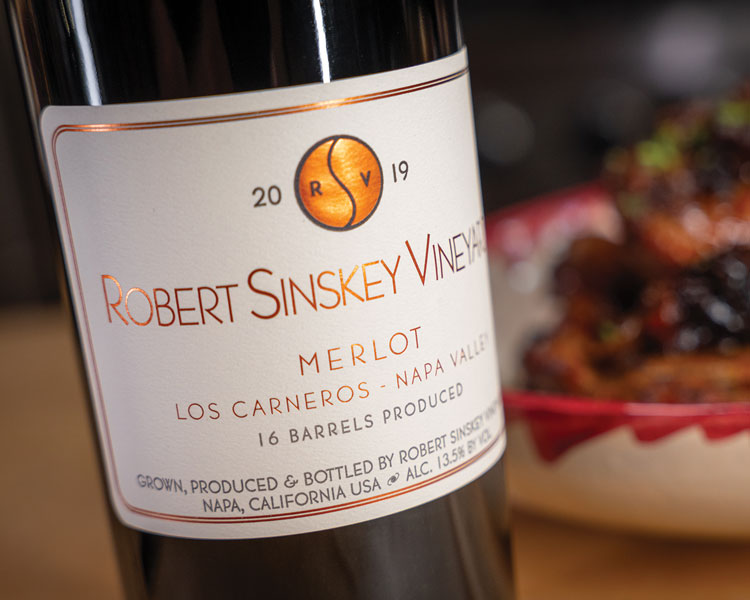
At RSVnapa’s Vandal Vineyard, perched in the windswept hills of Northern Carneros, Cabernet grows in a climate shaped by San Pablo Bay fog and persistent afternoon breezes. Farmed organically and biodynamically, the vineyard ripens slowly, preserving the natural balance that once defined Napa’s most graceful Cabernets.
The result is Cabernet Sauvignon with a classic groove: lower alcohol, bright natural acidity, and flavors of currant, cherry, and plum rather than jam and prune. A subtle herbal edge emerges with time, becoming savory as the wine ages gracefully.
RSVnapa’s Vandal Vineyard Cabernet Sauvignon reminds us why the king mattered in the first place.
Rob Sinskey