
Mustangs, Plums and Pinot…
Diversity amongst monoculture!
One hundred years ago, the French Prune (plum in English) was the most valuable crop in Napa. The famous “Nappa” leather, produced from sheep, pig, and cowhides, was a primary industry along the riverfront, and the country was amid prohibition.
Although the first commercial winery in Napa was established in the 1800s, Napa was known for its diversified agriculture, which included grapes, wheat, prunes, nuts, and livestock. There was an old saying that you could plant anything in Napa and it would grow well.
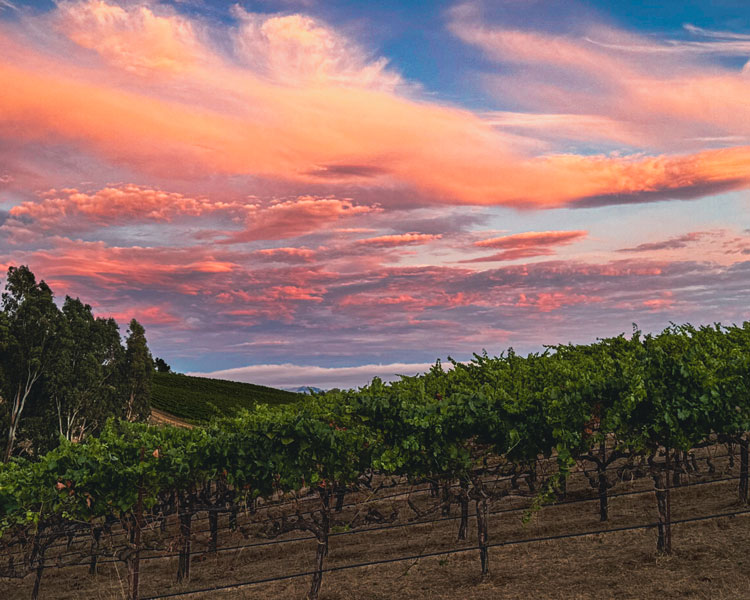
Today, nearly 100% of Napa’s agricultural value is derived from wine grapes. On the surface, this appears to be a good thing. Grapes grow well, and they currently command top dollar compared to other crops, but this rush to “cash in” comes with side effects. Land that is not ideally suited for grapes yields mediocre wines. Different crops are forced out, and since nature abhors monocultures, pests adapt to become increasingly challenging to manage without the use of toxic chemicals. Soils become depleted, losing their ability to support large microbial populations and their capacity to sequester carbon, while too-frequent tillage releases carbon into the atmosphere.
Wilding Farm is looking back for answers to today’s issues. This 84-acre site, which includes the original Capa Vineyard, is a real-world experiment in diversification. In the middle of the courtyard stands a decrepit, scraggly 100-year-old prune tree, a totem to the past. The diversified farm itself is a work in progress, planted with a fruit orchard, raised beds of vegetables, olive orchards, bees, sheep guarded by Central Asian Shepherds, quail, goats, a steer, and a horse. The orchard rows are planted with buckwheat, and the vineyards with a mix of legumes and clover.
The natural habitat is also a large part of the farm. Groves of eucalyptus support one of the largest heron rookeries in Northern California. Duck houses float on the ponds to provide ducklings with a haven from predators. Strategically placed owl, bird, and bat boxes hang from trees and buildings, raptor roosts dot the landscape, while habitat-creating hedgerows rim the vineyards.
The latest project will be to introduce wild mustangs to clear overgrown lands and aid in fire control. These are animals that would otherwise be culled (a polite way of saying killed) by the US government as part of its grazing cattle program on Bureau of Land Management lands. The mustangs are smaller and scrappier than typical riding horses. They will eat invasive plant species, help control poison oak, and raise the canopy of trees by walking under and nibbling on them. The removal of combustible material on the ground, in combination with raising the tree canopy, will significantly reduce the risk of fire and, if a grass fire occurs, minimize the risk of the fire harming the trees. If these were not reason enough, their waste will also contribute to the health of the soil.
The better we are as farmers, the better we are at growing and making wine. We can dedicate the best plots for wine grapes and utilize the rest in a diversified, responsible manner. We have learned that if you can strike a deal with nature, she will help you if you listen to her needs.
Rob Sinskey